
Table of Contents
If you’ve ever watched your child with autism spectrum disorder (ASD) linger at the edge of the playground, unsure how to step in, you’ve probably felt that quiet ache in your chest. You may have wondered, or found yourself asking: Will my child with autism ever make friends? Do they even want friendships?
Raising a child with autism often brings extraordinary joy. However, it can also bring moments of uncertainty, especially when it comes to social growth and establishing relationships.
Friendship, for some on the spectrum, can feel mysterious, unpredictable, unspoken, and full of invisible rules, making it take immense effort, practice, and energy. In some cases, this may cause social avoidance or other challenges.
The reassuring truth is this: social connection is not a personality trait. It’s a skill set. And skills can often be taught. For many children, teens, and adults with autism, ABA therapy, also called Applied Behavior Analysis, leads to better outcomes in relationships, according to studies.
It is also important to note that for many, the challenge of making friends with autism doesn’t stem from a lack of desire to connect with others. It’s that social interaction often operates on subtle cues and unwritten expectations that can be difficult for some on the spectrum to detect or respond to.
These include cues like tone of voice, facial expressions, timing, and personal space, which are helpful and informative when making friends.
While many neurotypical children often absorb these patterns naturally, over time, children with autism may need them broken down, explained, and practiced intentionally.
That’s where ABA structure becomes powerful.
In this guide by ABA Centers of Washington, we’ll walk you through practical, real-world strategies to support your ASD child’s social growth at home and in the community.
We will also explore how ABA therapy can provide custom support to help your loved one with ASD build confidence, strengthen communication, and develop meaningful friendships.
So, keep reading to learn more!
How ABA Helps with Social Development and Friendship Making In Autism
ABA therapy approaches social development the same way it approaches communication or daily living skills: by breaking complex behaviors into manageable steps and practicing them with support, repetition, and positive reinforcement.
The goal in ABA isn’t to change who your child is. It’s to give them a roadmap and tools to have as much autonomy as possible and feel safe navigating life.
How ABA Therapy Strengthens Social Confidence
While families can do plenty at home to build social confidence in children on the spectrum, ABA care provides additional layers of support and expertise. A Board Certified Behavior Analyst (BCBA) begins with assessment, identifying exactly which of your child’s social skills need support.
Maybe it’s initiating a conversation. Maybe it’s flexible thinking. Maybe it’s understanding personal space.
From there, ABA providers break larger goals into teachable components. A skill like “making a friend” becomes manageable when divided into smaller steps:
- Greetings
- Commenting on shared interests
- Responding appropriately
- Maintaining interaction briefly
- Ending positively
Social skills groups in ABA are especially powerful because they allow children to practice with peers in a supportive, coached environment. Mistakes become learning opportunities, not social failures.
ABA isn’t about forcing interaction. It’s about increasing independence and expanding your child’s ability to connect — in ways that feel achievable for them.
Creating a Safe Practice Space at Home
Home is where your child feels safest, and that safety makes it the perfect place to build confidence before stepping into bigger social settings and making new friends.
Small, playful activities can quietly build the foundational blocks of friendship.
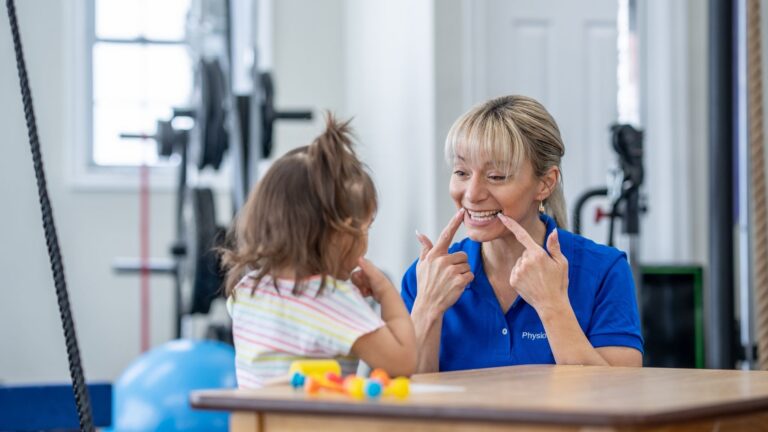
For example, something as simple as acting out emotions can help your child begin to recognize facial expressions and body language. When you take turns exaggerating “happy,” “frustrated,” or “surprised,” you’re not just being silly — you’re helping your child learn to read emotional cues.
Over time, those exaggerated expressions become easier to identify in real life.
Similarly, a casual game of tossing a soft ball back and forth can become practice for something much bigger: conversation. Each time your child asks a question, answers one, or waits for their turn to speak, they’re rehearsing the rhythm of social exchange.
In ABA, this back-and-forth is called reciprocity, and it’s one of the foundations of friendship.
Even role-playing with stuffed animals can make a difference.
And here’s something important: progress doesn’t have to look dramatic to matter. If your child maintains eye contact for two seconds longer than usual, responds to a greeting, or tolerates taking turns for a few minutes, those are meaningful steps towards making friends.
In ABA, we celebrate approximations. Small successes are still successes.
When Playdates Feel Overwhelming
For many neurodiverse families, playdates are where anxiety spikes. Unstructured time can feel unpredictable and overstimulating.
Instead of hoping things “just work out,” a little planning can go a long way.
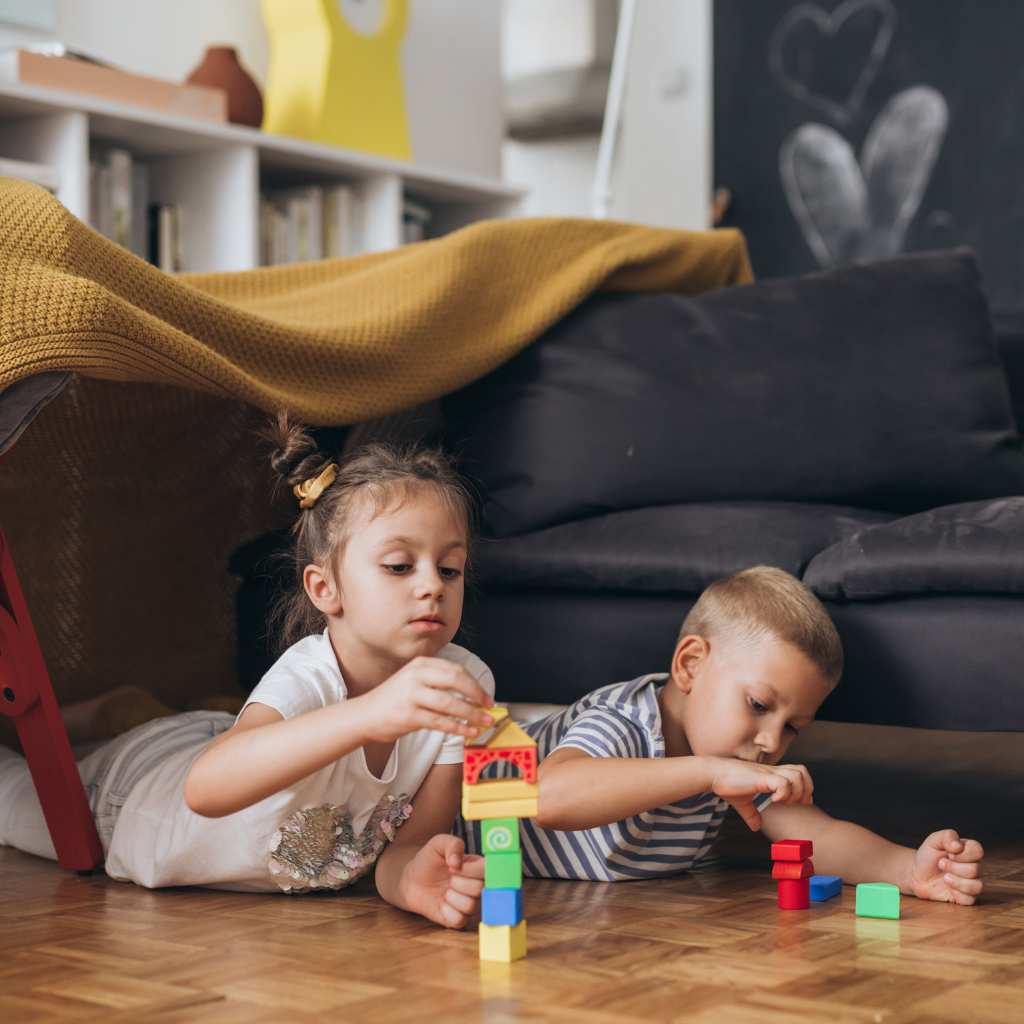
Start small. One peer. One shared interest. A clear activity. Building with LEGOs, decorating cookies, or completing a simple craft provides a beginning, middle, and end. That structure reduces uncertainty, and when uncertainty goes down, engagement often goes up.
Visual timers can help too. Knowing exactly when the playdate will end gives your child a sense of control. Predictability builds regulation.
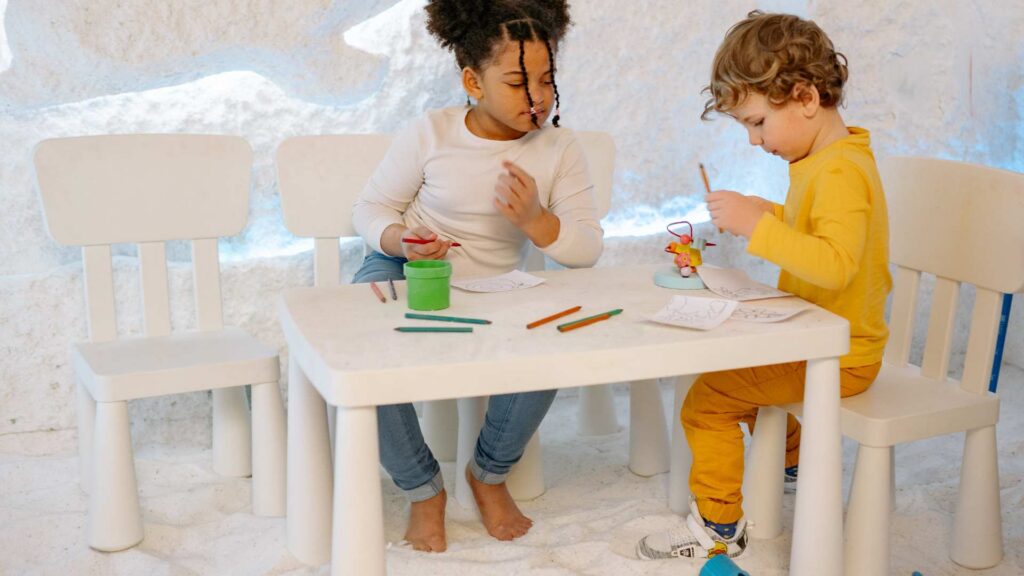
And here’s a gentle reminder: social growth doesn’t always look like animated group play. Sometimes it looks like parallel play, which often describes two children working side by side, occasionally glancing at each other.
That quiet proximity still counts. It builds tolerance, awareness, and shared space comfort.
ABA thrives on this kind of gradual progress — observing what works, adjusting support, reinforcing effort, and expanding from there.
Moving ABA Social Skills into the Real-World Friendships
One of the biggest challenges in social development is generalization, or using a skill learned in one setting in a new one.
A child who practices greetings at home may freeze when it’s time to apply them at the park, creating more obstacles to making friends. That doesn’t mean the social learning didn’t happen. It simply means the environment changed, which interrupted their application.
You can ease that transition by preparing ahead of time. Visiting new places during quieter hours can reduce sensory overwhelm. Talking through what will happen before you arrive — or even creating a simple picture-based “story” of the outing — gives your child a mental script to follow.
And when you do arrive, observation is okay. Watching other children first is not avoidance; it’s learning. Your child may be studying the flow of the game before stepping in.
When they do take a small social risk, even just walking closer to a group, acknowledge it specifically. Instead of a short “Good job,” try, “I saw you walk over to the group. That was brave.” Specific praise reinforces the exact behavior you want to see again.
That’s the heart of ABA: reinforcing behaviors that help your child succeed in their world.
Friendship Doesn’t Have to Look Typical to Be Meaningful
It’s easy to compare your ASD child’s journey to others. But friendship is not one-size-fits-all.
Some children may want one close friend. Others may prefer structured group interactions. Some may connect deeply over shared interests rather than spontaneous chatter.
All of it counts.
Helping your child with autism navigate social development is a marathon. There will be awkward moments. There may be setbacks. But there will also be breathtaking breakthroughs, like the first time they initiate a greeting, share a joke, or ask someone to play!
Celebrate the small milestones:
A wave.
A shared toy.
Five minutes of cooperative play.
Tolerating a noisy party longer than before.
These are building blocks, not small things.
Fortunately, with patience, structure, reinforcement, and compassion, your child can build meaningful social connections on their own timeline and in their own way. And one day, you may look up and realize they’re no longer standing on the sidelines. They’ve stepped in.
More About ABA Support That Makes a Difference
Every child’s path to friendship looks different. Some need gentle coaching. Others benefit from structured practice and errorless social opportunities. What matters most is having the right support system in place.
At ABA Centers of Washington, our team of BCBAs and experienced Registered Behavior Technicians (RBTs) creates individualized treatment plans designed to strengthen communication, social confidence, and real-world independence.
Through one-on-one ABA sessions, parent collaboration, and social skills programming, we help children and teens on the spectrum build the foundational skills that support meaningful friendships.
Whether your child is learning how to initiate conversations, navigate group settings, or regulate emotions during play, our ABA approach is data-driven, compassionate, and tailored to your child’s unique strengths.
If you’re wondering what the next step looks like, we’re here to help.
Contact us online or call us at (877) 554-0710 to learn more about our services, explore resources, or schedule a consultation.
Together, we can support your child’s social growth through ABA, one confident step at a time.