
Autism hasn’t always been described in terms of levels. In the past, clinicians diagnosed individuals with terms like Asperger’s disorder or PDD-NOS. Over time, they realized these categories created confusion and didn’t clearly show what support a child might need.
In 2013, the DSM-5 updated its criteria, combining these separate diagnoses into autism spectrum disorder and introducing the levels of autism to reflect varying support needs. The current edition, the DSM-5-TR (2022), keeps the same three levels.
The levels of autism reflect the extent of assistance a child may need to navigate daily experiences, rather than trying to place them into rigid categories. Autism affects communication, sensory processing, social interaction, and learning in unique ways for each person. Level 1, level 2, and level 3 autism acknowledge diversity and help guide treatment planning more precisely.
Levels of autism do not measure intelligence, character, or potential. They describe support needs at a particular moment. Children grow, learn, and change, and their support needs often evolve.
How Many Levels of Autism Are There?
There are three levels of autism: Level 1 (requiring support), Level 2 (requiring substantial support), and Level 3 (requiring very substantial support). Because clinicians rate social communication and restricted or repetitive behaviors separately, a child can have a different level in each area, for example, Level 2 for social communication and Level 1 for repetitive behaviors. These levels are flexible and can shift as the child develops new skills or encounters new environments.
What Is Level 1 Autism?
Level 1 autism is the level for children who “require support.” They may be independent in many areas, but without support, differences in social communication and flexibility can make school, friendships, and daily routines harder. You may hear this level called “high-functioning autism,” but that is not a diagnostic term, and many clinicians and families avoid it because it can hide real support needs. These children usually use spoken language and may understand basic social interactions, yet struggle with communication subtleties, such as reading facial expressions, initiating conversations, or interpreting tone and body language.
Common characteristics include:
- Challenges in forming or maintaining friendships
- Preference for predictable routines
- Difficulty adapting to unexpected changes
- Sensory sensitivities that affect participation in certain activities
- Strong or focused interests that may dominate conversations or play
People may misinterpret children at autism level 1 as shy or introverted, and their struggles may go unnoticed without a proper evaluation. With structured support, they can gain confidence in social interactions and develop skills to navigate their world more comfortably. Because these needs can be subtle, some parents first ask, “What is level 1 autism?” after a teacher or pediatrician raises a concern.
What Is Level 2 Autism?
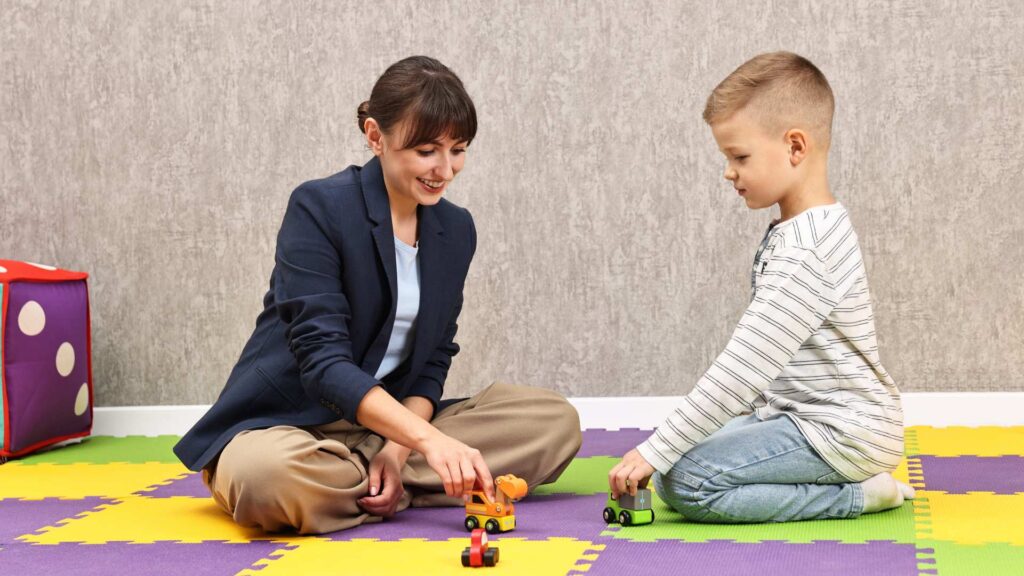
Level 2 autism is the level for children who “require substantial support.” Differences in communication and behavior are usually noticeable to others, even with support. Communication may be limited or need extra time, prompting, or visual aids. These children often benefit from highly structured routines and may struggle significantly with transitions or unplanned changes.
Common characteristics include:
- Noticeable communication differences
- Limited ability to initiate or respond in social interactions
- Sensory challenges that interfere with learning or play
- Need for predictable schedules to reduce anxiety
- Repetitive behaviors used for comfort or regulation
Children at autism level 2 often benefit from individualized interventions that focus on communication, daily living skills, emotional regulation, and social engagement. They often learn best through repetition, structure, and consistent reinforcement. If you’re asking, “What is level 2 autism?” after a recent evaluation, remember that the level describes your child’s current support needs, not their future.
What Is Level 3 Autism?
Level 3 autism is the level for children who “require very substantial support.” Differences in communication and behavior significantly affect daily life, and children usually need consistent support across settings. These children may have limited verbal communication or rely primarily on alternative methods like gestures, sign language, or AAC (augmentative and alternative communication) devices. They may react strongly to sensory stimuli and benefit from highly structured environments.
Common characteristics include:
- Significant challenges with expressive and receptive communication
- Intense sensory sensitivities or sensory-seeking behaviors
- Difficulty adapting to change
- High dependence on predictable routines
- Repetitive movements that help regulate emotions and stress
Children at autism level 3 can thrive with steady, compassionate support that respects their communication style, sensory needs, and learning pace.
Why Autism Levels Matter for Families and Professionals