

Table of Contents
A few moments create more uncertainty for parents than hearing, “We recommend scheduling a developmental pediatrician visit.”
For some families, the recommendation comes after concerns about speech delays. For others, it may follow conversations about social communication, sensory differences, or behaviors that seem different from those of other children the same age.
If you’re preparing for a developmental pediatrician visit, you’re not alone. Many parents begin searching for answers because they have noticed possible autism signs in toddlers and want to understand what comes next. While the process can feel overwhelming, knowing what to expect—and how to prepare—can help transform anxiety into confidence.
Keep reading this guide by ABA Centers of Washington as we explain how developmental pediatricians evaluate children, what families can do before an appointment, how autism is diagnosed, and why early intervention can make a meaningful difference.
What Is a Developmental Pediatrician?
A developmental pediatrician is a physician with specialized training in child development, behavior, learning differences, and neurodevelopmental conditions. According to the American Academy of Pediatrics, these specialists evaluate children whose development, communication, learning, or behavior may not be progressing as expected.
Developmental pediatricians use a comprehensive approach to assess a child’s strengths and challenges across multiple areas of development. They often collaborate with families, educators, therapists, and other healthcare professionals to identify underlying concerns and create individualized recommendations. Their goal is to support each child’s developmental progress, improve daily functioning, and help families access the resources and services their child may need to thrive.
What Is the Difference Between a Pediatrician and a Developmental Pediatrician?
Most parents are familiar with their child’s pediatrician, who monitors overall health, growth, and developmental milestones. During routine well-child visits, pediatricians often identify concerns that may require further evaluation.
A developmental pediatrician, however, has additional expertise in evaluating developmental, behavioral, social, learning, and communication differences. These specialists are trained to identify conditions that may affect how a child learns, interacts, communicates, or adapts to everyday situations.
When families notice autism signs in toddlers, a developmental pediatrician visit can provide a more comprehensive assessment and help clarify whether developmental differences require additional support.
Why Are Families Referred for a Developmental Pediatrician Visit?
Referrals typically occur when developmental milestones are delayed or when certain patterns suggest a child may benefit from a more detailed evaluation.
Developmental concerns are often first identified during routine pediatric appointments. The Centers for Disease Control and Prevention (CDC) recommends ongoing developmental monitoring and screening because early identification can help children access services and support sooner.
Some common autism signs in toddlers that may prompt a referral include:
- Limited eye contact
- Delayed speech or language development
- Not responding consistently to their name
- Reduced interest in social interaction
- Repetitive movements or play patterns
- Strong reactions to sensory experiences
- Difficulty adapting to changes in routine
- Loss of previously acquired skills
Many parents worry that noticing autism signs in toddlers automatically means their child has autism. However, a developmental pediatrician visit is designed to gather information, not make assumptions. The purpose is to understand a child’s development better and determine whether additional evaluation or support is needed.
How to Prepare for a Developmental Pediatrician Visit?
One of the most common questions families ask is how to prepare for autism evaluation appointments.
The good news is that preparation does not require special training. Parents already have some of the most important information because they see their child’s strengths, challenges, and daily routines firsthand.

If you’re wondering how to prepare for autism evaluation appointments, consider gathering:
- Medical records
- Previous developmental screenings
- Speech or occupational therapy evaluations
- School or daycare reports
- Family medical history
- Notes about developmental concerns
Another helpful strategy for preparing for autism evaluation appointments is to write down specific examples of behaviors you’ve observed.
For example, instead of saying your child struggles socially, describe situations that illustrate your concerns:
Does your child avoid eye contact?
Have they stopped using words they once used regularly?
Do they become overwhelmed by certain sounds or textures?
Parents who want to know how to prepare for autism evaluation appointments may also find it useful to record short videos of behaviors observed at home. Children often behave differently in unfamiliar settings, and videos can help provide a more complete picture.
Finally, write down questions in advance. Many parents find that once the developmental pediatrician visit begins, it’s easy to forget concerns they intended to discuss.
What Happens During a Developmental Pediatrician Appointment?
A developmental pediatrician visit is usually much more detailed than a standard pediatric checkup. Depending on the child’s needs, appointments may last anywhere from one to three hours.
Developmental and Medical History Review
Topics may include:
- Pregnancy and birth history
- Early developmental milestones
- Communication skills
- Eating and sleeping patterns
- Social interactions
- Family medical history
- Behavioral observations
Direct Observation and Interaction
The physician will typically spend time observing your child during play and social interaction.
During the developmental pediatrician visit, specialists may evaluate communication skills, play behaviors, attention, social engagement, sensory responses, and adaptive functioning.
Developmental Screening and Assessment
Developmental screening is an important part of many evaluations. These evidence-based tools help specialists identify developmental patterns that may require additional assessment or intervention.
As experts highlight, developmental screening is designed to detect developmental differences early so children can receive appropriate support when needed.
For families concerned about autism signs in toddlers, this portion of the developmental pediatrician visit is especially important because it helps determine whether further diagnostic assessment may be beneficial.
What Tests Does a Developmental Pediatrician Use During an Autism Evaluation?

Many parents expect a single medical test to confirm autism. In reality, autism diagnosis involves a comprehensive clinical evaluation rather than a blood test or brain scan.
Research explains that autism evaluations rely on developmental history, caregiver interviews, behavioral observations, and standardized assessment tools to determine whether a child meets established diagnostic criteria.
During a developmental pediatrician visit, specialists may use:
- Developmental screening questionnaires
- Parent interviews
- Behavioral observations
- Communication assessments
- Cognitive evaluations
- Adaptive functioning assessments
- Standardized autism diagnostic tools
This is one reason why understanding how to prepare for autism evaluation appointments is so valuable. The information parents provide often plays an important role in helping specialists make accurate clinical decisions.
A developmental pediatrician visit is not focused on labeling a child. Instead, it seeks to understand how the child communicates, learns, interacts with others, and experiences the world.
Questions Parents Should Ask During a Developmental Pediatrician Visit
Parents often leave appointments wishing they had asked more questions. Consider asking:
- Does my child meet the criteria for autism?
- Are there other developmental conditions being considered?
- What strengths did you observe?
- What areas may need support?
- What services would you recommend?
- Should additional testing be completed?
- What should our next steps be?
- How will progress be monitored over time?
These questions can help families leave the developmental pediatrician visit with a clearer understanding of the evaluation results and recommendations.
Why Early Autism Evaluation Matters
When autism signs in toddlers are identified early, children can access services during important stages of development.
Early answers often lead to earlier support, and early support can make a meaningful difference in long-term outcomes. Early intervention can help children with autism strengthen communication, adaptive living, social, and self-advocacy skills.
What Happens After an Autism Diagnosis?
For many families, a developmental pediatrician visit serves as the first step in a broader support plan.
If autism is diagnosed, recommendations may include:
- Applied Behavior Analysis (ABA) therapy
- Speech therapy
- Occupational therapy
- Parent training
- Educational accommodations
- Ongoing developmental monitoring
ABA therapy is one evidence-based approach that helps children build meaningful skills while promoting greater independence and confidence. Programs are individualized to each child’s goals, strengths, and support needs.
With the right support, many children with autism continue developing important life skills that help them thrive at home, school, and within their communities.
Find Guidance and Support with ABA Centers of Washington
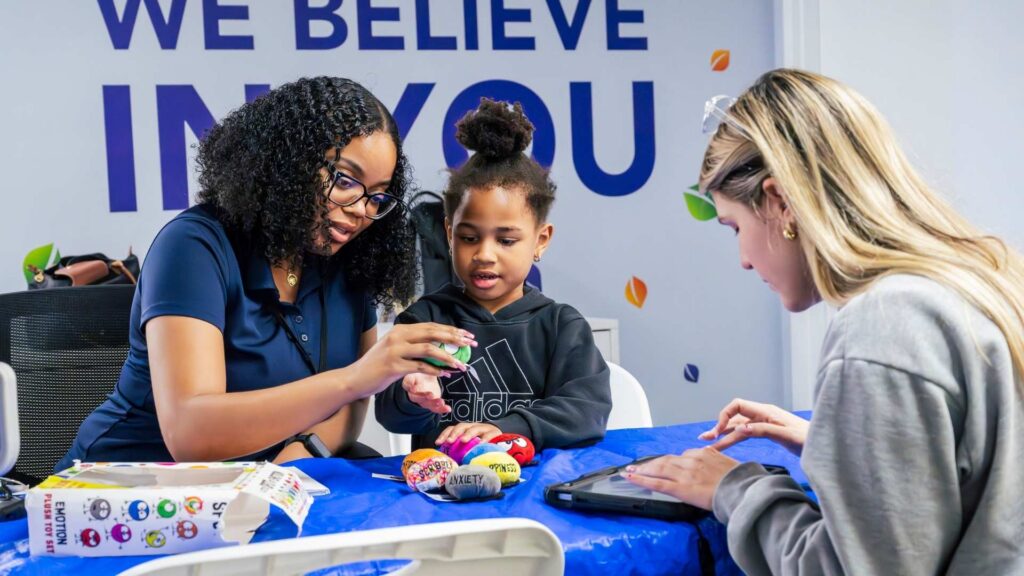
If you’re noticing autism signs in toddlers or preparing for a developmental pediatrician visit, you don’t have to navigate the process alone.
At ABA Centers of Washington, we help families access autism evaluations, evidence-based ABA therapy, parent support, and individualized treatment planning. Whether you’re learning how to prepare for autism evaluation appointments or exploring next steps after a diagnosis, our team is here to help.
To learn more about our services or schedule a consultation, call (877) 554-0710 or visit our contact page.
Every child deserves the opportunity to reach their full potential. The first step is getting the answers and support your family needs.